Association for Computational Linguistics (ACL) Honours UZH Professor for research that helped shape today's AI systems
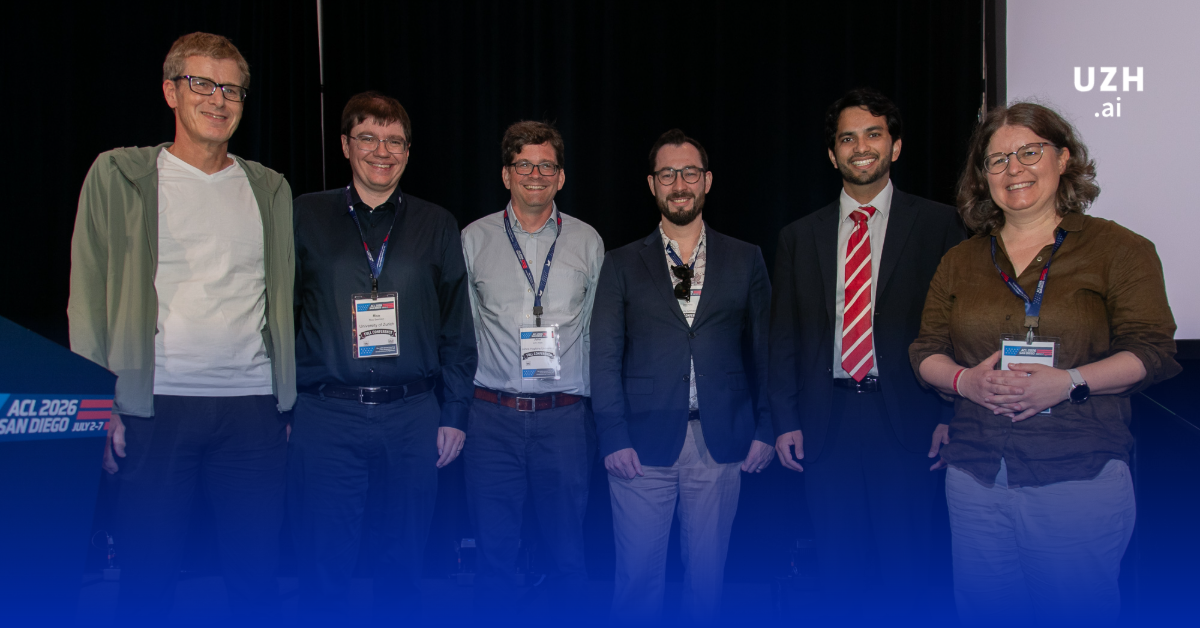
Rico Sennrich, Professor of Computational Linguistics at the University of Zurich, has been awarded the ACL 2026 Test-of-Time Paper Award for the landmark paper Neural Machine Translation of Rare Words with Subword Units, co-authored with Barry Haddow and Alexandra Birch.
Originally presented at the Annual Meeting of the Association for Computational Linguistics in 2016, the paper has become one of the most influential works in modern natural language processing. Its ideas helped transform the way machines process language and remain highly relevant to today’s AI systems.
The award recognises research that has demonstrated lasting and significant impact on the field over the past decade. Sennrich and his co-authors introduced a method that enabled machine translation systems to handle rare and previously unseen words more effectively by breaking words down into smaller parts, known as subword units.
This approach, particularly through the use of Byte Pair Encoding (BPE), helped establish subword tokenisation as a key technique in modern language AI. By allowing models to process names, compound words, new terms and different languages more flexibly, the work addressed one of the central challenges of natural language processing and became influential far beyond machine translation.
While the exact number of systems and users building on these ideas cannot be quantified, the paper’s influence is clear. It has been cited more than 11,800 times by researchers worldwide and is widely regarded as a foundational contribution to modern language AI.
“This award highlights the importance of fundamental research that continues to shape the field years after its publication,” said Rico Sennrich. “It is gratifying to see ideas developed to improve machine translation become part of the foundations of today’s AI systems.”
The ACL Test-of-Time Paper Award is among the most prestigious honours in computational linguistics, recognising papers whose impact has endured and expanded over many years. It also highlights the lasting importance of advances in language representation and tokenisation for the development of contemporary AI systems.
The award is a powerful example of the long-term impact that fundamental AI research can have. Today, the University of Zurich is home to a vibrant and growing community of researchers working across artificial intelligence, data science and digital technologies. As AI continues to transform research, industry and society, recognitions such as this underline the value of academic research that not only advances knowledge, but also helps shape the technologies used around the world.
A decade after its publication, Sennrich’s award-winning paper remains a cornerstone of modern language AI.