Association for Computational Linguistics (ACL) Honours UZH Professor for research that helped shape today's AI systems
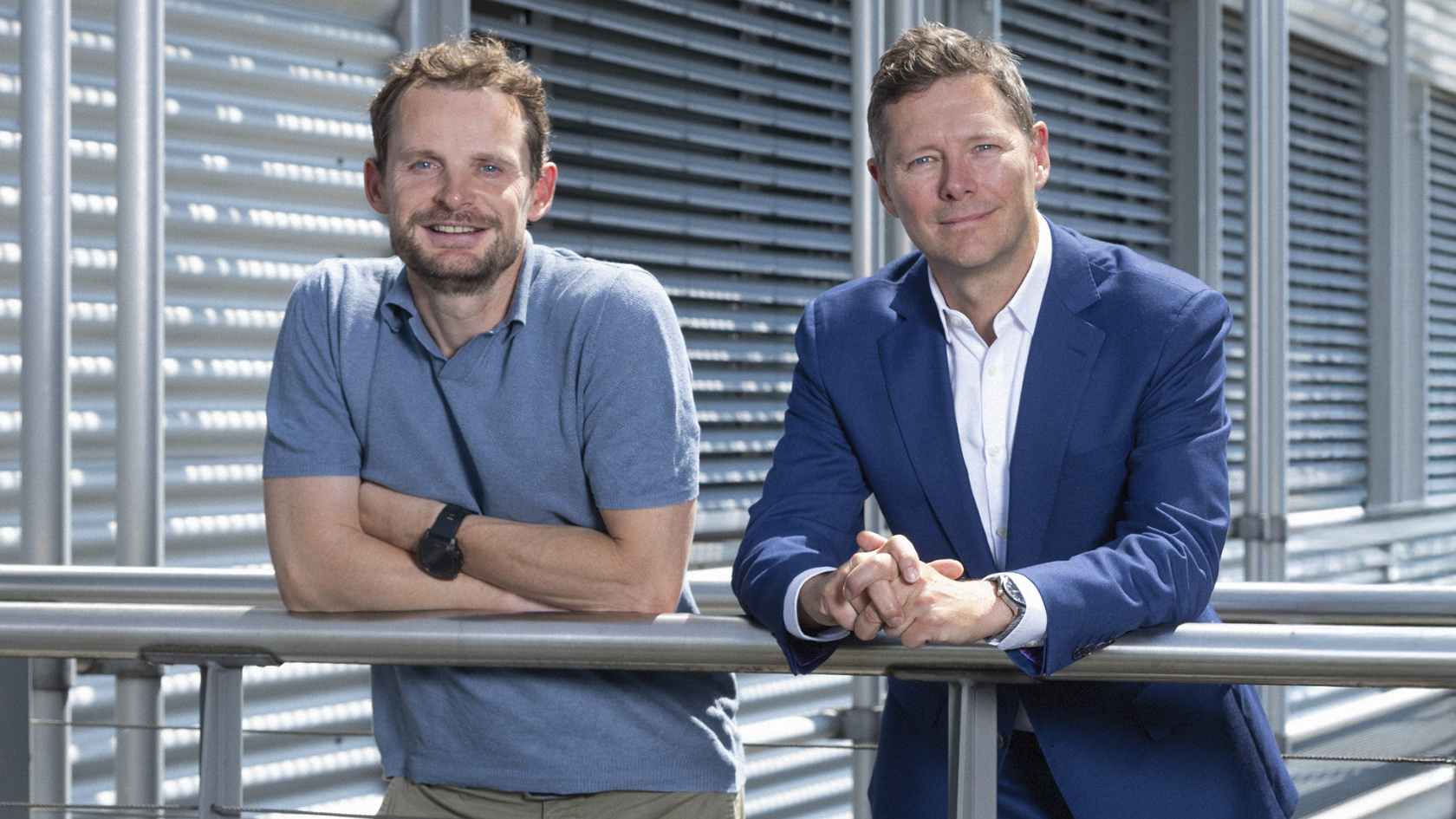
Rico Sennrich, Professor of Computational Linguistics at the University of Zurich, has been awarded the ACL 2026 Test-of-Time Paper Award for the landmark paper Neural Machine Translation of Rare Words with Subword Units, co-authored with Barry Haddow and Alexandra Birch.
UZH.ai, the AI hub of the University of Zurich, is expanding its core team – and we’re looking for people who want to build and scale AI collaborations at Switzerland’s largest university.
As the National Research Program Digital Transformation comes to a close, a new wave of digital change, driven by artificial intelligence, is already underway and needs to be addressed, says Abraham Bernstein.
At UZH, basic research brings about innovative products and applications. Researchers at UZH filed several patents in 2025, and four new spin-offs were created.
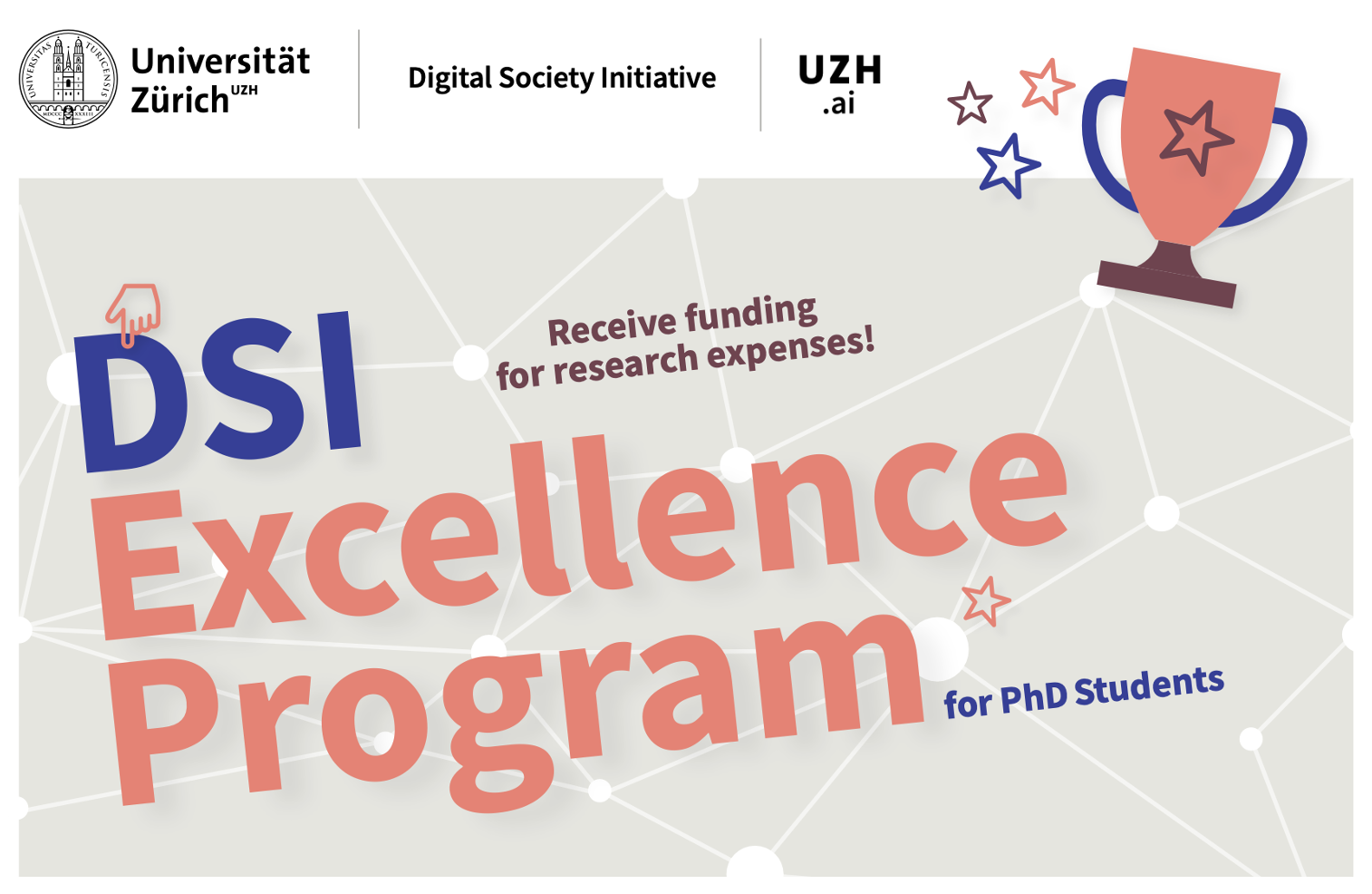
The UZH.ai Fellowship is a specialized, funded track within the DSI Excellence Program. It is designed for outstanding doctoral students at the University of Zurich whose research focuses on the development, application, or societal implications of Artificial Intelligence. While following the full interdisciplinary curriculum of the Digital Society Initiative (DSI), UZH.ai Fellows receive additional financial support, dedicated industry mentoring, and access to a specialized AI research …
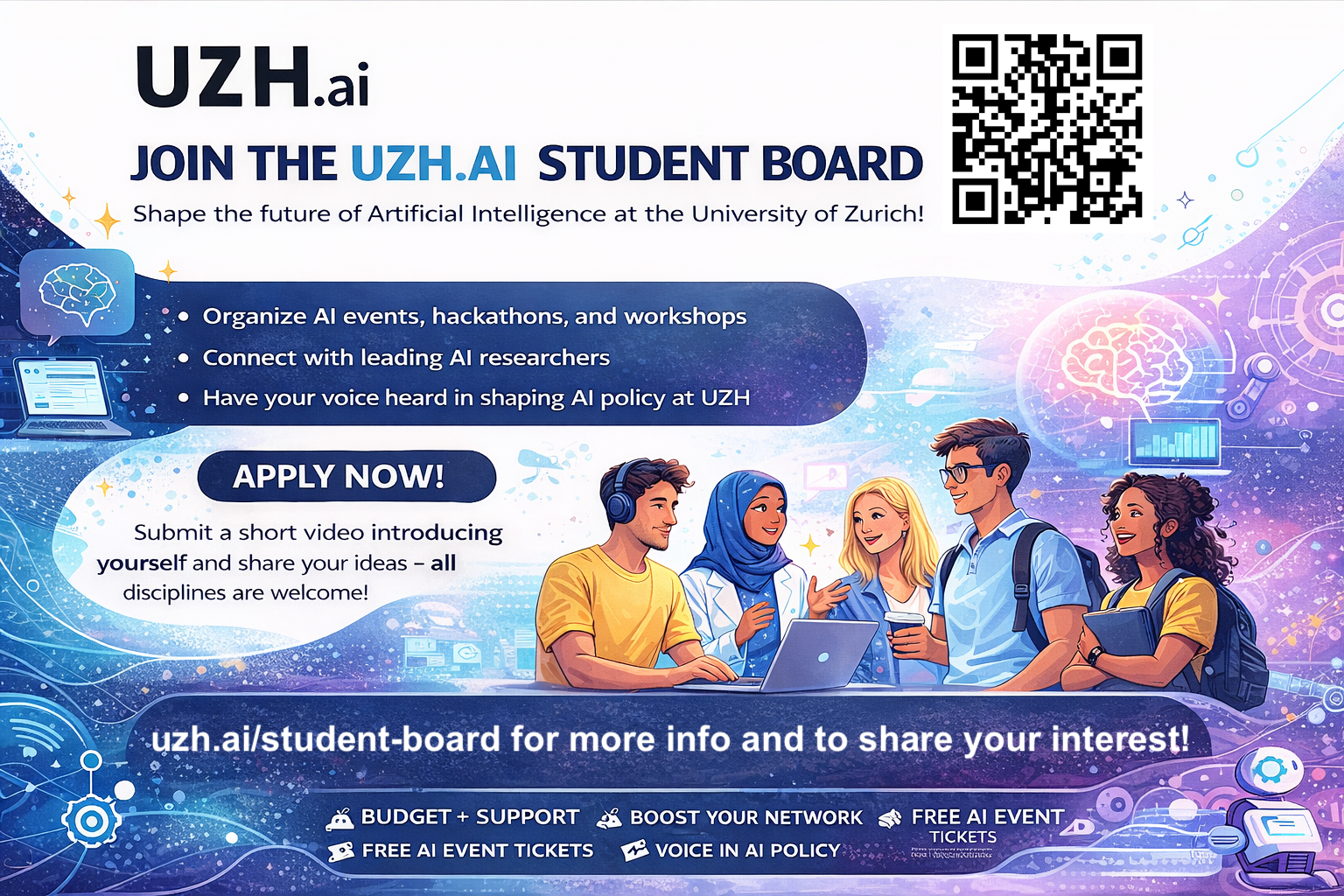
Students shaping the future of AI at the University of Zurich Artificial Intelligence is transforming research, education, and society. At the University of Zurich, students play an important role in exploring what this transformation means across disciplines. The UZH.ai Student Board brings together motivated students who want to actively shape how AI is discussed, experienced, and developed at UZH. Students from all faculties are invited to contribute ideas, organize activities, and help …
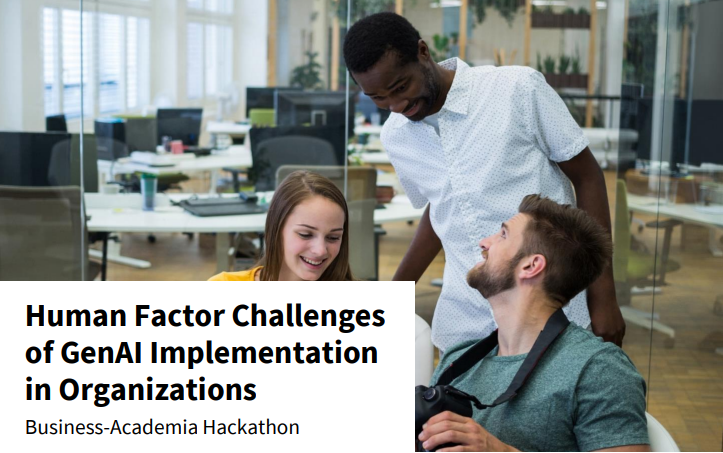
UZH.ai Hub invites organizations to join our 2026 Hackathon!
At the University of Zurich, we’re teaming up with the Data Innovation Alliance for a two-day Business-to-Academia Hackathon focused on the human factors of GenAI implementation. -Gain visibility within the UZH and Data Innovation Alliance ecosystems. -Bring your real GenAI business challenges -Collaborate with 40–60 interdisciplinary student innovators -Receive actionable concepts & prototypes in just 2 days -Access expert mentoring from academia & industry + early talent …
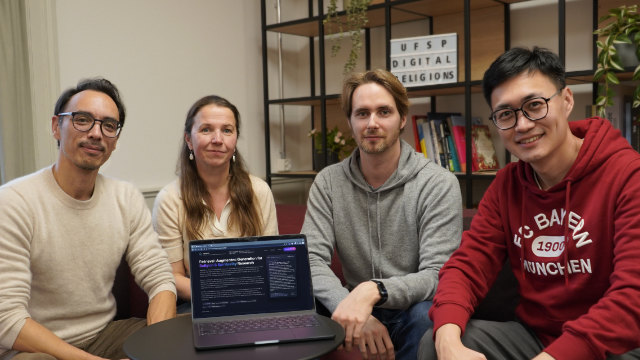
A team of four researchers has won the UZH Postdoc Team Award for creating an AI tool that can search through thousands of UN documents for information on religion and spirituality.
AI evaluates texts without bias—until source is revealed
Large Language Models change their judgment depending on who they think wrote a text, even when the content stays identical. The AI systems are strongly biased against Chinese authorship but generally trust humans more than other AIs. The authors of the UZH-study call for more transparency and governance.
Artificial intelligence is increasingly taking root in everyday life. Most people in Switzerland are worried about AI and the next generation of digital technology, but those who regularly use AI are more sanguine about it. While the youngest spend more time online than they would like to, older people and those with little digital literacy are falling behind, according to the latest data from a representative long-term study being conducted by the University of Zurich.
In the latest column in the «DSI Insights» series, philosopher and ethicist Jana Sedlakova asks what role conversational artificial intelligence should play in mental health care—and makes a recommendation.
Artificial intelligence (AI) is permeating more and more areas of life. Scientists at the University of Zurich (UZH) are developing new solutions, but they are also highlighting the consequences for our society. At the AI+X Summit, UZH researchers will be presenting their projects.
On October 2, Zurich becomes the center of the AI world at the AI+X Summit, co-organized by UZH.ai, the ETH AI Center, and ZHAW. With more than 2,000 participants, 150+ speakers, 50+ sessions, and 55+ exhibitors, the summit brings together researchers, students, and industry leaders to explore how AI is reshaping science, society, and the economy. UZH colleagues benefit from a 20% discount with the code: VC-499 UZH students can apply for a FREE ticket by filling in this form: …
Clear Majority of Swiss Media Professionals Use AI Tools – But Have Reservations
A vast majority of media professionals in Switzerland use AI tools in their day-to-day work but do so mostly to support their tasks rather than produce content, according to a study by the University of Zurich. They are rather ambivalent in their assessment of the impact of AI tools on media quality, and they are in favor of introducing industry-wide standards and strengthening cooperation in the area of IT infrastructure to reduce the sector’s dependency on tech platforms.
Half of Swiss Population Wary When AI Reports on Science
The majority of the Swiss public supports scientific research and condemns attacks on science, according to the 2025 Science Barometer survey conducted by the University of Zurich. Most people in Switzerland use artificial intelligence, but many approach it with caution.
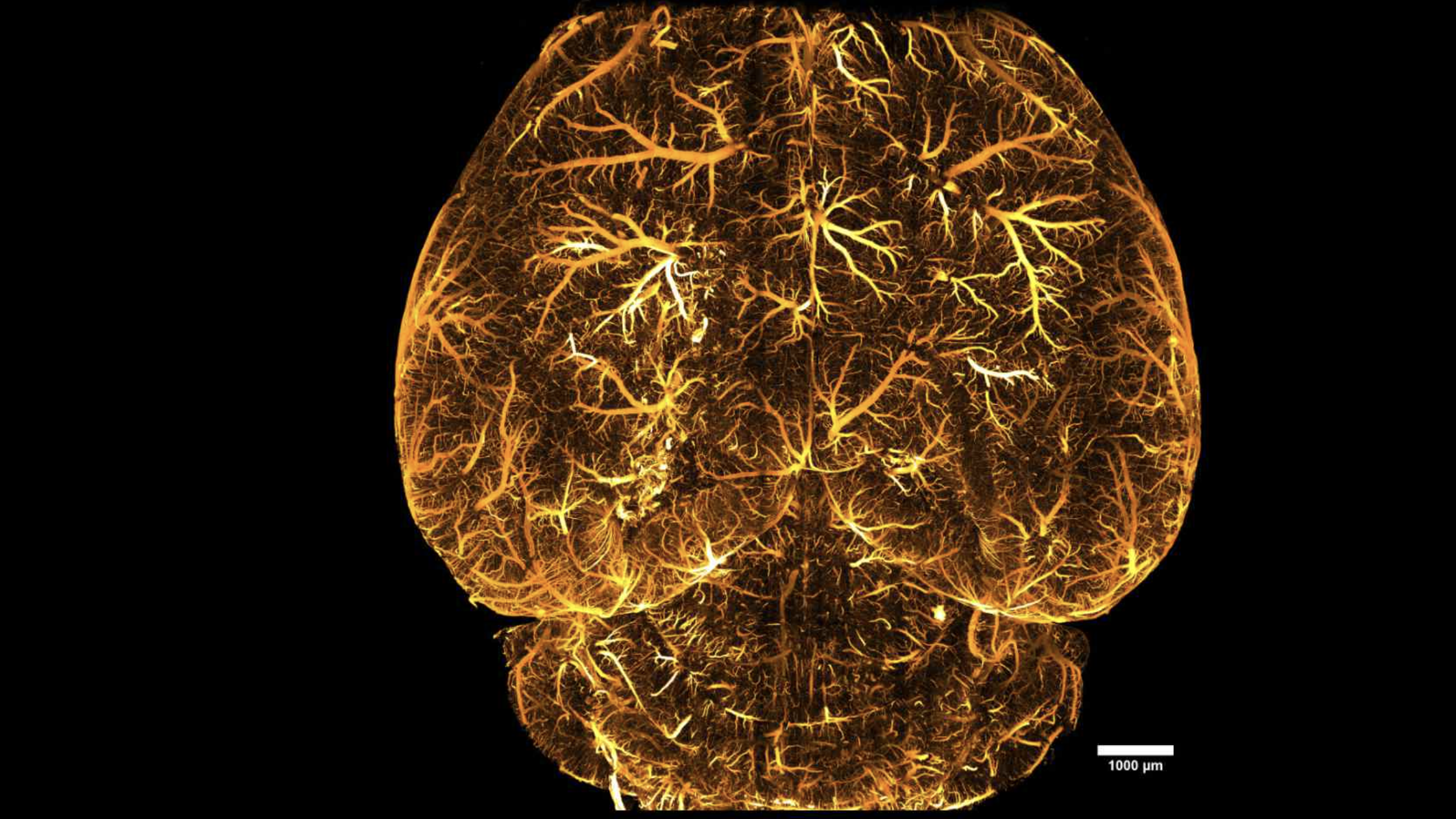
Modern imaging is contributing significantly in giving us a better and better understanding of how our brains work. In the long term, this will also help us to treat learning disorders in a more targeted way and develop new learning methods. Techniques for doing this are being developed at UZH.
A centurion wearing sneakers and shades? AI image generators sometimes take serious liberties with history. Researchers in classical studies have now developed a tool that creates images of antiquity that are grounded in history, offering fresh insights and perspectives.
Lucas Pelkmans and Michael Zering are the masterminds behind Apricot BIO, a University of Zurich spin-off. They developed a process that quickly determines the right medication for cancer patients. This provides physicians with valuable information to help them offer personalized medication-based treatment.









.png)